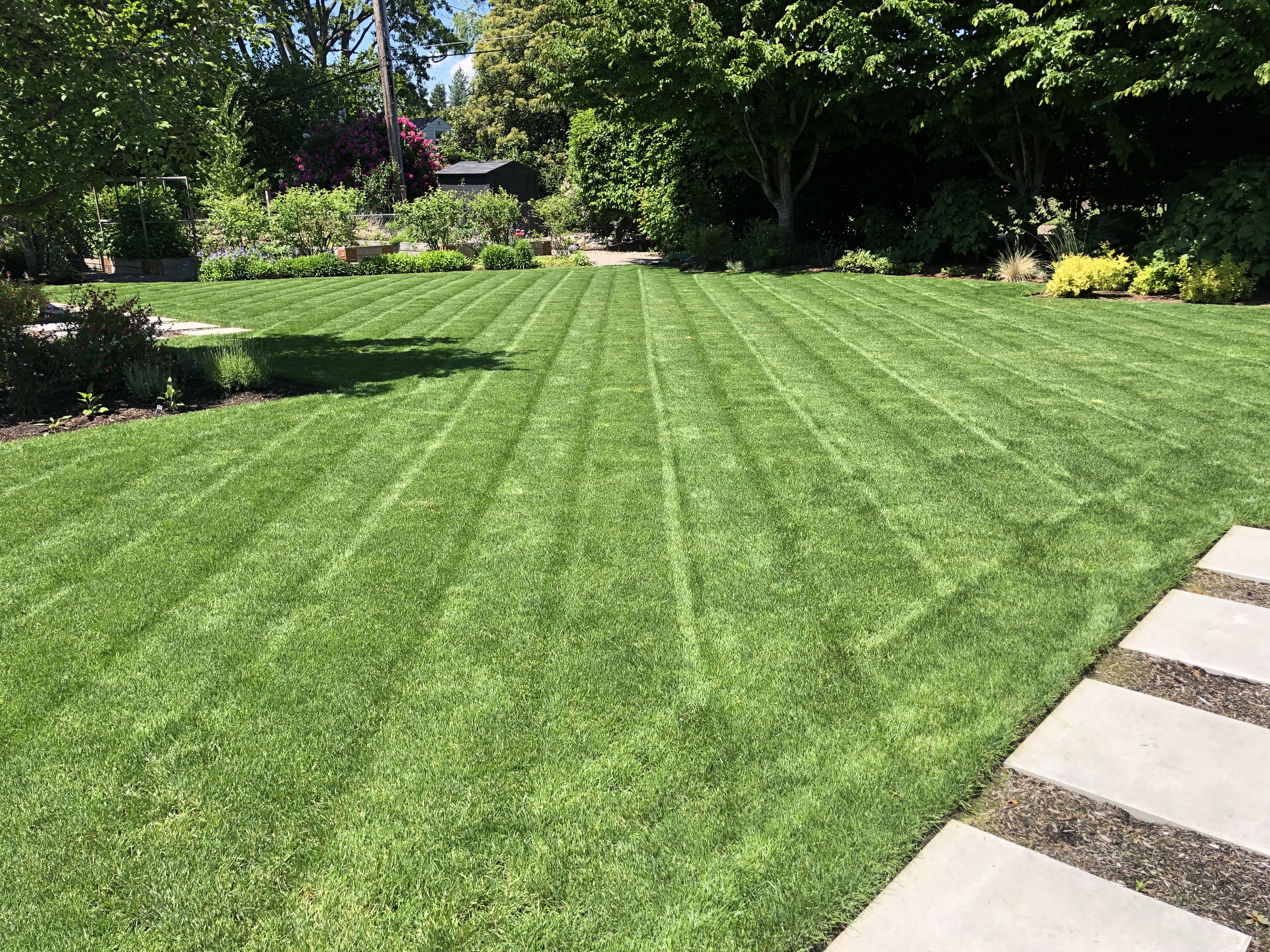
Lawn Aeration in Hillsboro
Core Aeration for Residential Lawns in Hillsboro, Oregon
We provide residential lawn aeration based on turf conditions and seasonal considerations in western Oregon. At Preferred Landscape Services, we assess whether aeration fits into a broader approach to lawn health rather than treating it as an automatic annual task.
We’ve provided landscaping services since 1998. Our company began with routine landscape maintenance and expanded into design, construction, and maintenance, giving us a broad understanding of how lawns function within complete residential landscapes.
Request a free lawn aeration estimate by calling (503) 782-5900. We can discuss your lawn and the care appropriate for your property.
Professional Aeration & Property Care
We’re bonded and insured, and our trained employees use professional-grade tools. We also arrive on time for appointments, allowing homeowners to plan scheduled landscape work with confidence.
Our qualifications extend across landscape maintenance and water management. At Preferred Landscape Services, we’re a RainBird® Select Contractor® and have received the Angie’s List Super Service Award every year since 2006. These credentials reflect the standards we bring to residential property care.
How Aeration Supports Lawn Health
Aeration mechanically removes small plugs of soil from the lawn. By contrast, spike aeration makes holes by pushing soil aside. Removing plugs can relieve compaction, reduce thatch, and create channels that allow water, air, and nutrients to reach the root zone.
Compacted soil can restrict turfgrass roots, reduce turf density, and limit water infiltration. Water may remain near the surface or run off instead of moving into the soil.
Conditions that may warrant a closer lawn assessment include:
- Water pooling or running off instead of soaking into the soil.
- Thin turf in areas exposed to regular foot traffic.
- Dry spots that persist despite appropriate irrigation.
- A heavy thatch layer between the grass and soil surface.
Aeration is a secondary lawn-care practice, not a replacement for mowing, fertilizing, or irrigation. Those practices remain central to turfgrass care, while cultivation supports them when compaction and thatch interfere with healthy growth.
Spring & Fall Aeration in Western Oregon
Timing matters because turf responds differently as soil moisture and root growth change. Oregon State University Extension identifies spring as a good period for aeration because grasses produce new root systems during that season. Open soil channels can encourage deeper root development as active growth resumes.
Fall can also provide suitable conditions for coring and overseeding. In western Oregon, an early September soaking can prepare dry soil for cultivation and make fall lawn care more effective. The right timing still depends on the lawn’s condition, soil moisture, and the work being considered.
Oregon State University Extension research indicates that aerating a lawn can reduce water use by 20-30%. Actual water needs vary with weather, turf condition, irrigation practices, and soil characteristics, but improved infiltration can help water reach the root zone instead of remaining on the surface.
Aeration & Overseeding Serve Different Needs
Aeration and overseeding are complementary practices with separate purposes. Coring addresses compacted soil by removing plugs, while overseeding adds grass seed where greater turf density is desired.
Applying seed after cultivation can provide the seed-to-soil contact needed for germination. Spring and fall generally offer favorable turfgrass germination periods in the region, although successful establishment also depends on moisture, temperature, seed selection, and continuing care.
We provide seasonal maintenance guidance that includes aeration and dethatching after sod or seed installation. We consider the lawn’s stage of establishment and current condition before recommending either practice.
What to Expect During Lawn Aeration
We begin by reviewing the lawn’s condition to determine whether cultivation is appropriate. This keeps the decision focused on the property rather than an arbitrary date.
During service, equipment removes plugs of soil across the lawn. These plugs usually remain on the grass and gradually break down into the turf, so seeing them immediately afterward is normal.
If overseeding follows, the open surface can improve contact between seed and soil. Water supports germination, but the appropriate watering pattern depends on site conditions and the seed used.
How Often a Hillsboro Lawn May Need Aeration
A lawn doesn’t necessarily need aeration every year or on a fixed schedule. The better guide is whether compaction, limited infiltration, recurring dry spots, or excessive thatch has returned. Differences in traffic, soil pressure, and moisture mean each lawn’s needs can vary.
Regular observation places cultivation in the right context. It has a supporting role when physical conditions begin limiting water movement or root development.
Plan Aeration Around Your Hillsboro Property
Contact us for a free quote or estimate for lawn aeration in Hillsboro, Oregon. We can discuss your lawn’s condition and how seasonal maintenance could fit your outdoor needs, budget, and available time.
Our flexible maintenance plans reflect the needs of each property. We back our work with a satisfaction guarantee and competitive warranties on labor and materials.
Call (503) 782-5900 to request your free estimate for Hillsboro lawn aeration.

